AQUAFLY
Climate-Smart Circular Food Systems for Malawi
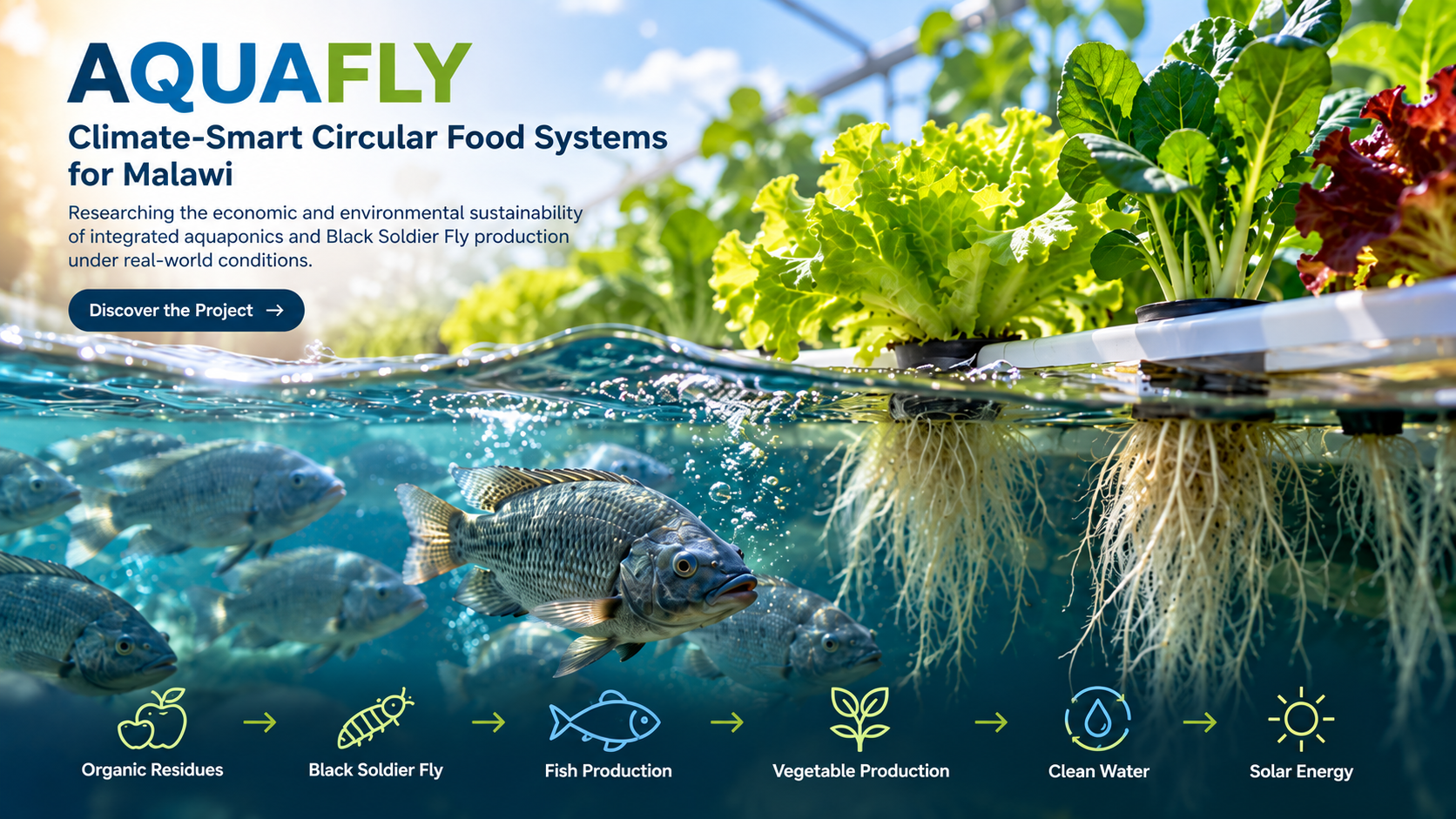
Researching the economic and environmental sustainability of integrated aquaponics and Black Soldier Fly production under real-world conditions.
From a promising concept to evidence-based solutions
AQUAFLY investigates whether integrated, resource-efficient food production systems can provide a technically feasible, economically viable and environmentally sustainable option for rural and urban communities in Malawi.
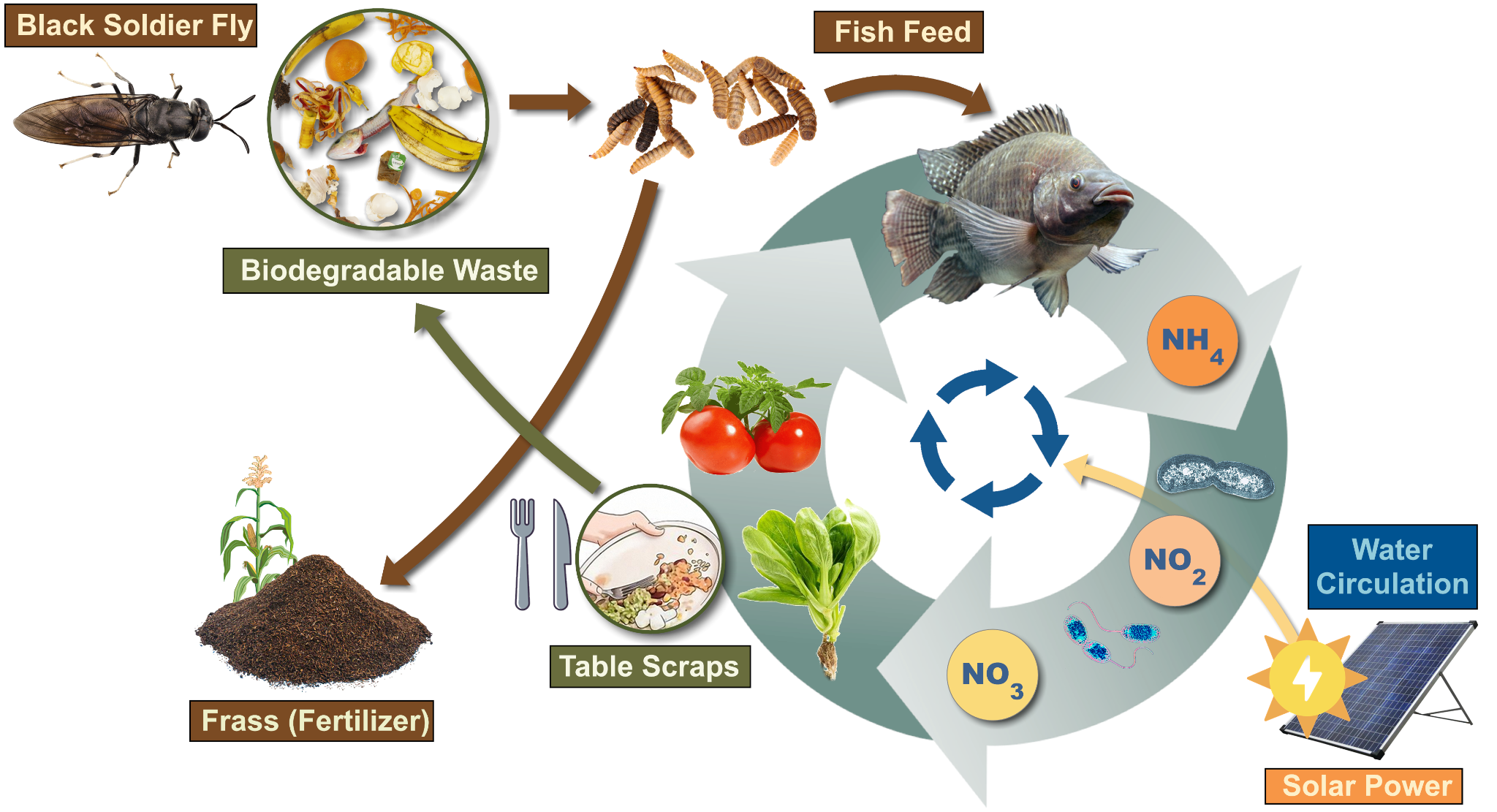
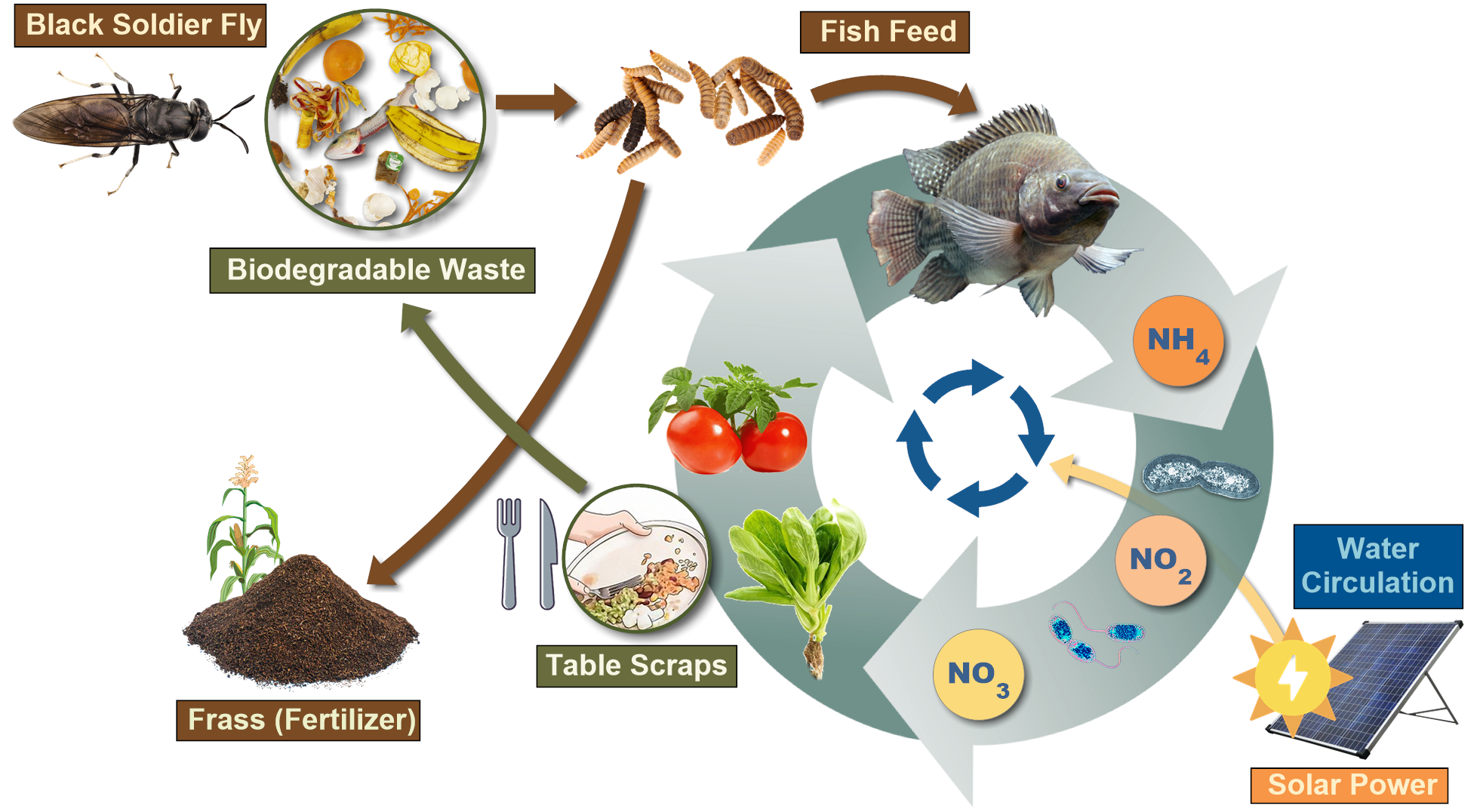
Two new experimental production systems will combine aquaponics, native tilapia production, traditional vegetables and neglected crops, Black Soldier Fly rearing, food processing and solar-powered technologies.
From pilot experience to systematic research
An existing pilot farm provides practical experience and a reference point. AQUAFLY takes the next step by establishing two new experimental systems designed specifically for systematic evaluation.
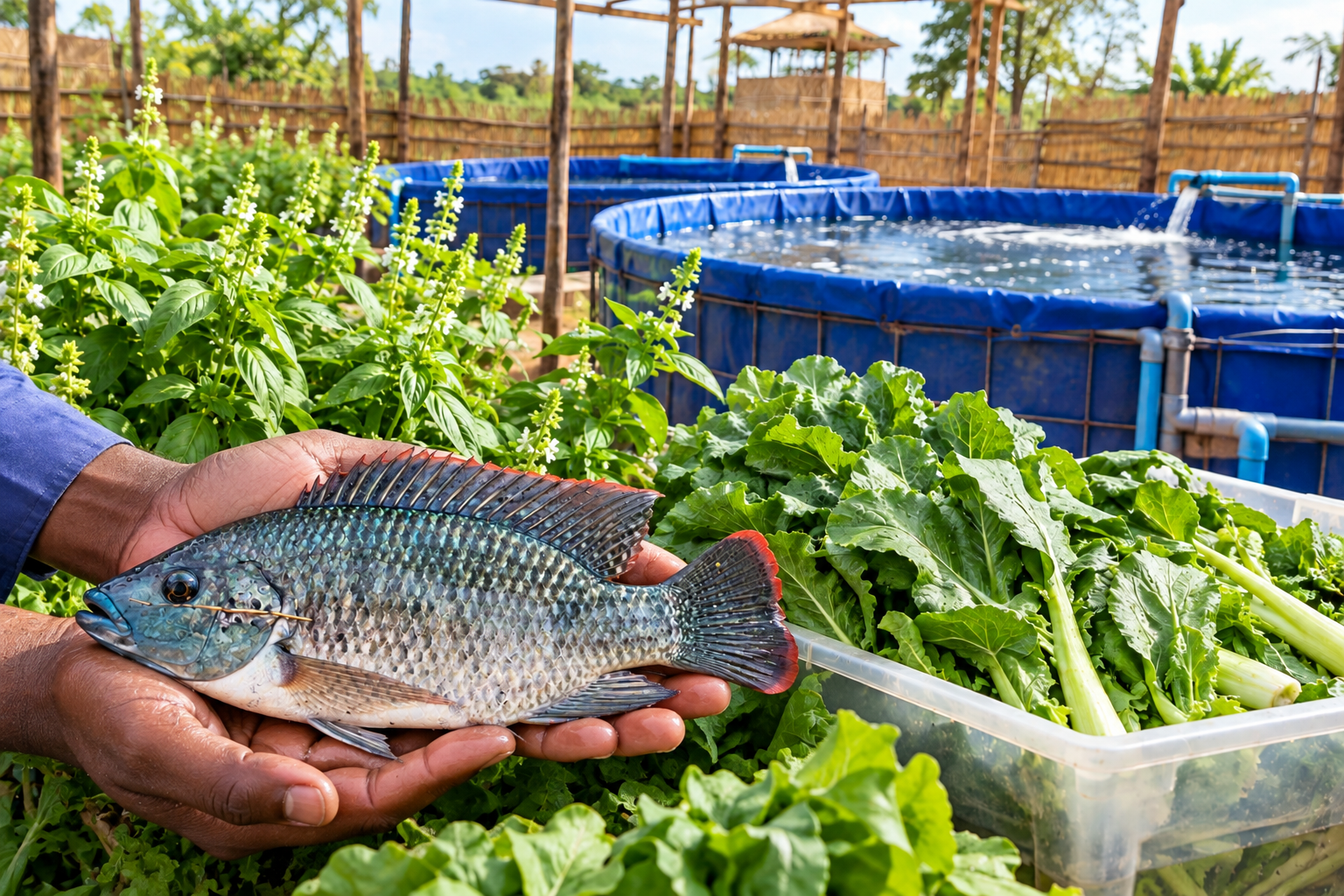
Rural case study
A standardised production module will be tested with selected stakeholders under real-world rural conditions.
Urban case study
A second standardised production module will allow investigation under urban conditions where land and water constraints differ.
Food production under increasing resource pressure
Agriculture in Malawi is strongly affected by climate change, drought and acute water shortages. At the same time, insufficient preservation and storage contribute to post-harvest losses.
Water
Investigating resource-efficient production where water availability is a critical constraint.
Local resources
Testing whether organic residues, local crops and locally produced feed ingredients can strengthen circular production.
Evidence
Generating data on costs, operation, performance and socio-economic conditions rather than assuming transferability from other regions.