From pilot experience to evidence-based solutions
AQUAFLY is a research and development project on climate-smart circular food production under the conditions prevailing in Malawi.
The problem
Malawi faces severe challenges related to climate change, drought, water scarcity and post-harvest losses. Innovative approaches are needed that use water, land, nutrients and locally available resources efficiently while supporting reliable food production.
The innovative approach
AQUAFLY combines aquaponics with Black Soldier Fly (BSF) rearing, food and feed processing, preservation technologies and solar-powered infrastructure. The systemic integration of these processes — and the assessment of their viability under Malawian conditions — is the central research task.
Two new experimental systems
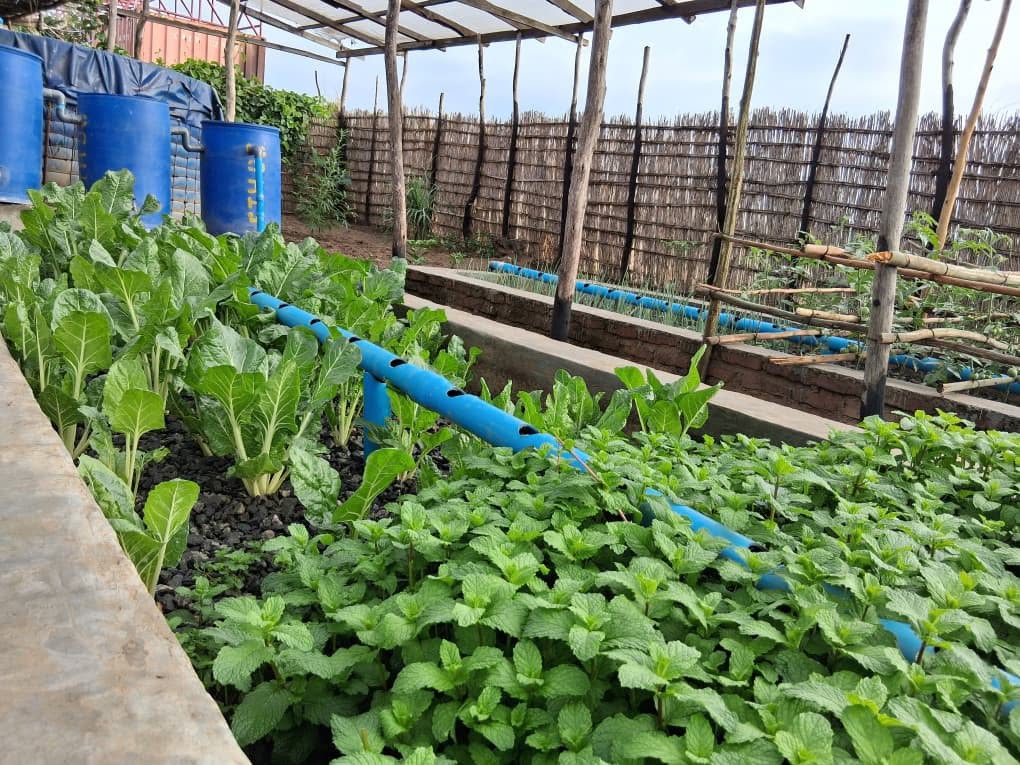
The project implements a climate-smart, circular bioeconomy by combining aquaponics with the rearing of the black soldier fly (BSF). The project provides two standardised, solar-powered production modules (aquaponics, BSF rearing, processing technology, solar dryers). In experimental case studies under real-world conditions, selected rural and urban stakeholders (families, cooperatives) test various technical processes.
Guided by the project team, farm managers trial different scenarios regarding:
- efficiency and rearing of native tilapia species
- The cultivation of traditional vegetables, herbs and neglected crops (NUS)
- Utilisation of biogenic residues through black soldier fly (BSF) rearing
- Processing, preservation and storage of food and animal feed
Project objective
The overarching aim is to investigate whether sustainable fish and vegetable production, technical equipment, local resources and training can support long-term self-reliance and economically sustainable operation by families and cooperatives.